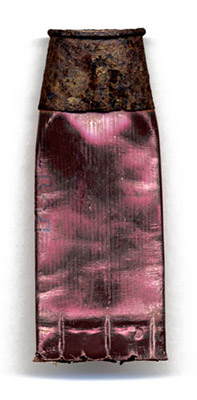
The tools included cameras, of course, but not exclusively. He does not shy away from exploring new ways to use available technology. For example, he used a scanner to produce the series Spent, which turned out remarkably well. Also of note, the tools used were not exclusively for capturing images. Old hunting videos of his grandfather were used as a source for his work, not by capturing new images but by using images that had already been made and cycling the footage on different channels. From this source also came How to Survive Your Own Death, produced by corrupted data when transferring footage. These are examples of how compelling works of art may be produced when the medium is approached in new, creative ways.
An important element that was discussed about his work was the sense of place. In some ways, the use of space defined the "place". In another way, I thought the "place" was more of a place in time or in memory. The nostalgia of the past was an element that recurred in his work, which started with hunting videos of his grandfather. So much of the work presented during the lecture seemed to echo the element “past”, of hunting, or both.
I found the timeline of his work interesting. From the work he discussed, it began with super 8 film of his grandfather hunting. Then he made portraits, with the land and the composition calling back to the films. Next, he focused on the land itself. This led to hunting structures, and shot gun shells as subject matter. When the series are viewed individually, it may not be noticed; but, as a whole it suggests something about the artist. To me, it suggests a fixation on the past and on the ritual of the hunt, which is very much linked to his Grandfather.

No comments:
Post a Comment